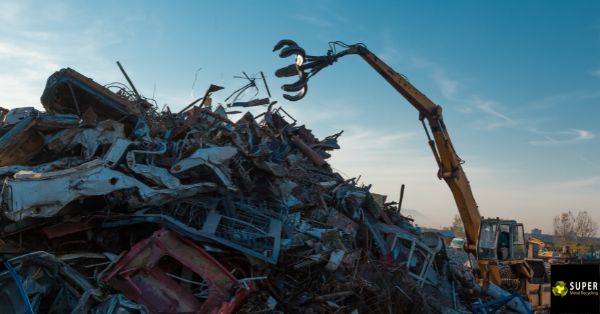
As sustainability is no longer a choice, but a necessity, scrap metal recycling has become a practice that is very important in today’s world. Not only does it protect the environment, it drives economic growth. This industry transforms discarded metal into valuable raw materials that decrease waste at both local and global levels and supports local and global economies in conserving natural resources. In this blog we are going to explore how scrap for metal by Union Metal Recycling helps the environment as well as the economy making it a win – win situation for the future.
What is Scrap Metal Recycling?
Scrap metal recycling is the process by which used up metal is processed and turned into new products to then sell or to use for other purposes. Unlike paper and plastic, steel, copper, aluminum and brass can be recycled over and over with no loss of quality. The creating process of metal for subsequent use in making is by working with metal taken from readily available products to sort, clean, melt, and reshape them.
Not only does this sustainable practice cut down on waste, decrease energy usage, and level out our need for mining natural resources, it teaches us how to be energy efficient in an active sense. Recycling of scrap metal is very important in the circular economy system when people pay more attention to environmental issues.
Environmental Benefits of Scrap Metal Recycling
- Reduces Waste in Landfills
Scrap metal recycling keeps metal waste from heading to landfills where it would sit for decades, or even centuries, to decompose. If you divert metal waste, it preserves landfill space for non recyclable stuff. This reduces soil contamination, water pollution, and emissions from decaying waste.
- Lowers Greenhouse Gas Emissions
Global greenhouse gas emissions are also due to metal mining and refining. But recycling metals in itself uses less energy. An example is aluminium recycling, with recycling consuming 95% less energy than new production from raw ore. That’s using energy that translates directly into less emissions, which is very powerful enviable in the fight against climate change.
- Promotes Energy Conservation
Recycling metals costs far less energy than producing metals from raw materials. Steel for example can be recycled resulting in 60% less energy used to make it from iron ore. By conserving energy, we reduce our dependence on fossil fuels, which in turn helps mitigate climate change and ensures energy security.
Economic Benefits of Scrap Metal Recycling
- Job Creation and Economic Growth
Thousands of people worldwide have employment in the scrap metal recycling industry. The collection, transportation, processing and resale of recycled metals require workers. It helps the local economy and creates jobs with stability.
- Reduces Production Costs for Manufacturers
Manufacturers can choose to use recycled metals over raw materials and do so at lower costs. In addition, recycling metals also represents the bulk of mining, refining and transporting virgin Valuable commodities traded globally. When domestic resources are scarce, many countries import recycled metals in order to use them in manufacturing. Raw materials consume more energy, labor and equipment, which raise cost. Recycled metals, on the other hand, are ready for reuse after processing; manufacturers can thus reduce costs of production and increase profits.
- Generates Revenue for Households and Businesses
Scrap metal can be sold to recycling centers by households and businesses so they can make money. You can sell old appliances, metal furniture, and parts from cars for cash. On a larger scale construction companies and demolition firms get money selling the metal waste from old buildings, bridges and vehicles. This added revenue can be reinvested in other projects or operational costs.
- Boosts International Trade
Recycled metals are traded around the world as important commodities. When domestic resources are scarce, many countries, in order to manufacture, import recycled metals. This trade generates export revenue for nations that recycle large volumes of metal. By engaging in the global scrap metal trade, countries can enhance their balance of trade and increase foreign exchange reserves.
- Supports Economic Resilience
Prices of metal are highly volatile and are subject to changes in supply, changes in demand and geopolitical events. Using recycled metal helps manufacturers curb their raw material imports and thus, protect themselves from price hike. This economic stability is vital for industries like construction, automotive, and electronics manufacturing, where metals play a critical role in production.
How to Support Scrap Metal Recycling
- For Households:
Collect and sell old appliances, electronics, aluminum cans, and metal tools at local recycling centers. Many recycling facilities pay for these materials.
- For Businesses:
Construction, demolition, and manufacturing companies can set up recycling programs to manage and sell their scrap metal. Collaborating with recycling companies ensures smooth collection and processing.
- For Governments:
Policies that support recycling will help the scrap metal industry grow – deposit return schemes, banning metals landfills and encouragement of new recycling plants.
Conclusion
Scrap for metal recycling is a way for countries to pursue both economic development and sustainability. This saves waste, conserves natural resources and cuts emissions of carbon into the earth’s atmosphere while at the same time strengthening the global economy. At the same time, the industry creates jobs, generates revenue and stabilises manufacturing costs. Scrap metal recycling is an act of embracing the circular economy, the economy that utilises resources used rather than discarded. In addition to the environment, this approach also promotes economic resilience and longer growth.